
There are so many ways to describe New York City, however few would include “clean” in their list. Yet our city has made great strides towards improving the quality of the air we all share – not only compared to the smoggy era of the mid-twentieth century, but also within the past decade. Join us for a night of science surrounding our most precious shared resource – the city air that we breathe every day – and learn about how scientists measure air particulates and the many efforts, including the planting of urban trees, that researchers are undertaking to continue to improve NYC’s air.
Doors open at 7:00PM. Event is 21+ with limited capacity - buy your $5 ticket here!
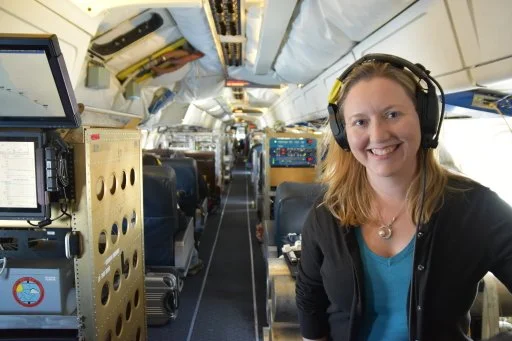
Why has the air quality in New York City improved recently?
Roisin Commane, PhD
Associate Professor in the Department of Earth and Environmental Sciences at Columbia University and Lamont-Doherty Earth Observatory
Dr. Roisin Commane's research combines measurements of trace gases in the atmosphere with models to quantify rates of gas emissions into the atmosphere from both natural and human sources, in cities and in remote areas. Her research group operates a greenhouse gas monitoring network in the New York metro area and works with New York State agencies to identify previously unidentified sources of methane and develop pathways to reduce these emissions in urban areas.
Air quality in New York has dramatically improved in recent years. Dr. Commane will explain why it was so bad, how it has improved and what we might want to think about as we develop future plans for the city.
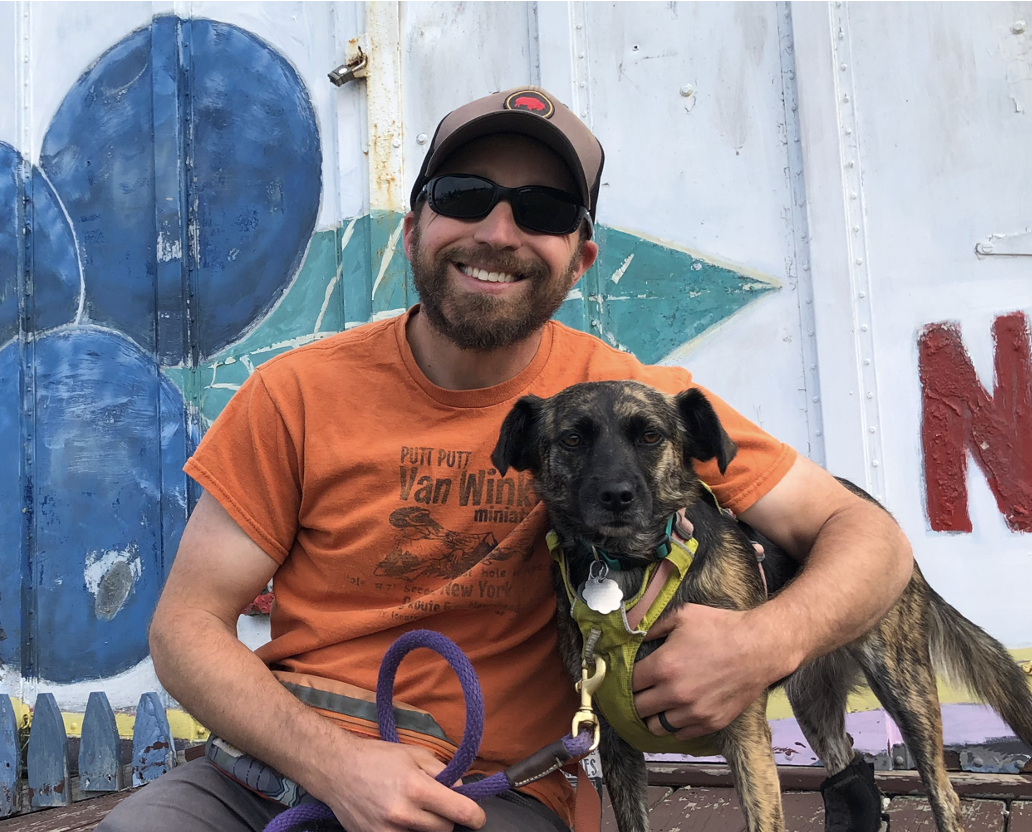
Seeing the city for its trees
Andrew Reinmann, PhD
Associate Professor of Environmental Science at the CUNY Advanced Science Research Center and at Hunter College
Dr. Andrew Reinmann's research focuses on understanding the effects of environmental change (e.g., climate change, urbanization, land cover change, and invasive species) on the terrestrial carbon cycle and ecosystem services across a continuum of human-disturbed ecosystems. He combines a variety of tools in his research including field observations, ecosystem experiments, and laboratory analyses with GIS, remote sensing, and modeling. Dr. Reinmann currently has projects in forested and human dominated landscapes throughout the mid-Atlantic and Northeastern U.S.
New York City has planted over 1 million trees since 2007 and has lofty goals of achieving 30% tree canopy cover by 2035, making it a global leader in urban tree planting. Dr. Reinmann's talk will cover the numerous ways trees improve the livability, sustainability, and climate resilience of our city and how the life of a city tree differs from that of its rural counterpart.